



Swimming Lessons for Children with ADHD: A Closer Look at the Benefits
If your child has ADHD, you already know how exhausting it can be to find activities that actually work for them. Too much noise, too many rules, too much waiting around, and suddenly you've got a meltdown on your hands and a kid who never wants to go back. You're not alone. A lot of parents in Miami-Dade County and Broward County are searching for something that clicks for their child, something that channels all that energy without overwhelming them.
Here's what many parents are discovering: the pool might be the answer. Swimming offers a unique combination of physical activity, sensory input, and structure that can be genuinely helpful for kids with ADHD. In this post, we'll break down why swimming works so well for neurodiverse learners, what specific benefits you can expect, and what to look for in a swim program.
Why Swimming Lessons for ADHD Are Worth a Closer Look
Children with ADHD often struggle in traditional team sports. Too much downtime between turns. Too much social noise. Too many abstract instructions. Swimming sidesteps a lot of those issues right from the start.
In the pool, your child is moving almost constantly. There's no bench-warming. The physical demands of staying afloat and moving through water require focus, and that focus tends to come naturally because the body is already deeply engaged. Water is also a natural sensory regulator. The feeling of being submerged, the resistance of the water, the rhythm of breathing during strokes, all of it gives the nervous system a steady stream of input that many kids with ADHD find calming rather than overwhelming.
Research backs this up. Studies have found that rhythmic, bilateral physical activities (like swimming, where you alternate arm strokes while kicking) activate both sides of the brain and can improve attention and executive function. That's the scientific explanation. The simple version: Swimming is the kind of workout that makes the brain work better, not just the body.
How Swimming Helps Children with ADHD: Focus, Structure, and Sensory Benefits
The Water Does a Lot of the Work
One of the most common frustrations parents share is that their child can't stay focused long enough to get anything done. In the pool, that changes. The water's constant resistance and temperature provide a kind of "whole-body hug" that grounds kids who are often dysregulated. Many occupational therapists refer to this as deep pressure input, and it's one reason why swimming is frequently recommended as a sensory activity for children with ADHD or sensory processing differences.
When a child is swimming laps or working on a specific stroke, their brain has a clear, immediate task. There's no waiting. There's no distracting environment. Just them, the lane, and the movement. That's the focus on their terms.
Structure Without Rigidity
Good swim instruction is structured but adaptable. Each class has a clear beginning, middle, and end. Skills build on each other in a logical sequence. That kind of routine is genuinely stabilizing for kids with ADHD, who often thrive when they know what to expect.
At the same time, swimming allows for individual progress. Your child isn't measured against a team score. They're measured against their own last lesson. That shift in focus, from competing with others to competing with yourself, can do wonders for a child who's struggled to feel successful in group settings.
A Natural Energy Outlet
Here's something that surprises many parents: after a swim lesson, their child is calmer. Not exhausted in a cranky way, but genuinely settled. Swimming burns a significant amount of energy because it works the entire body. And unlike a sport where your child might sprint for two minutes and then stand around for fifteen, swimming keeps them active for the full session.
That consistent physical output triggers the release of dopamine, serotonin, and norepinephrine. These are the same neurotransmitters that ADHD medications target. Exercise, and swimming in particular, gives the brain a natural boost that can improve mood, attention, and behavior, often for hours after the lesson ends.
Building Confidence One Stroke at a Time
Kids with ADHD often hear "no," "stop," or "pay attention" more than their peers do. That takes a toll. Confidence takes a hit. Social struggles can follow.
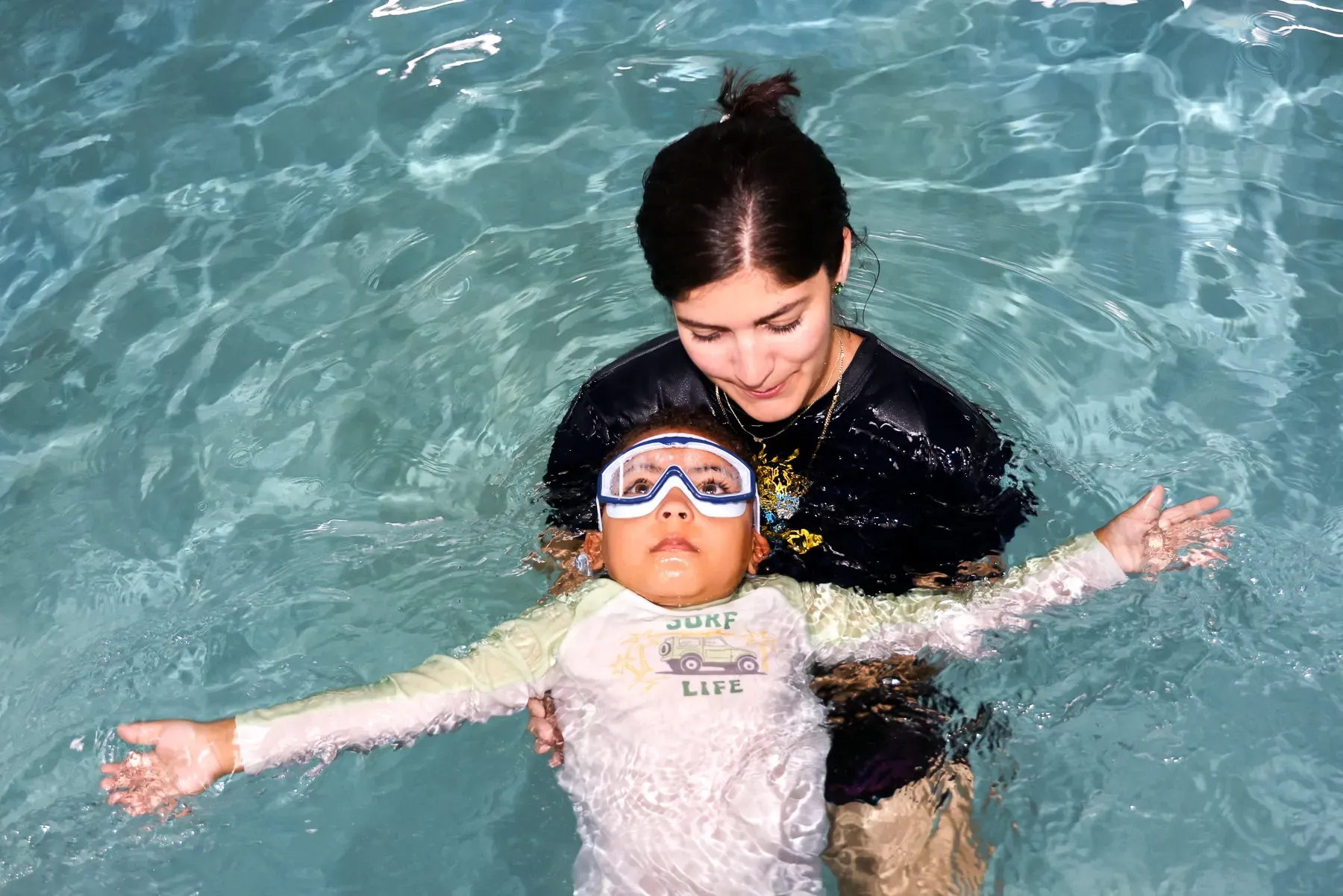
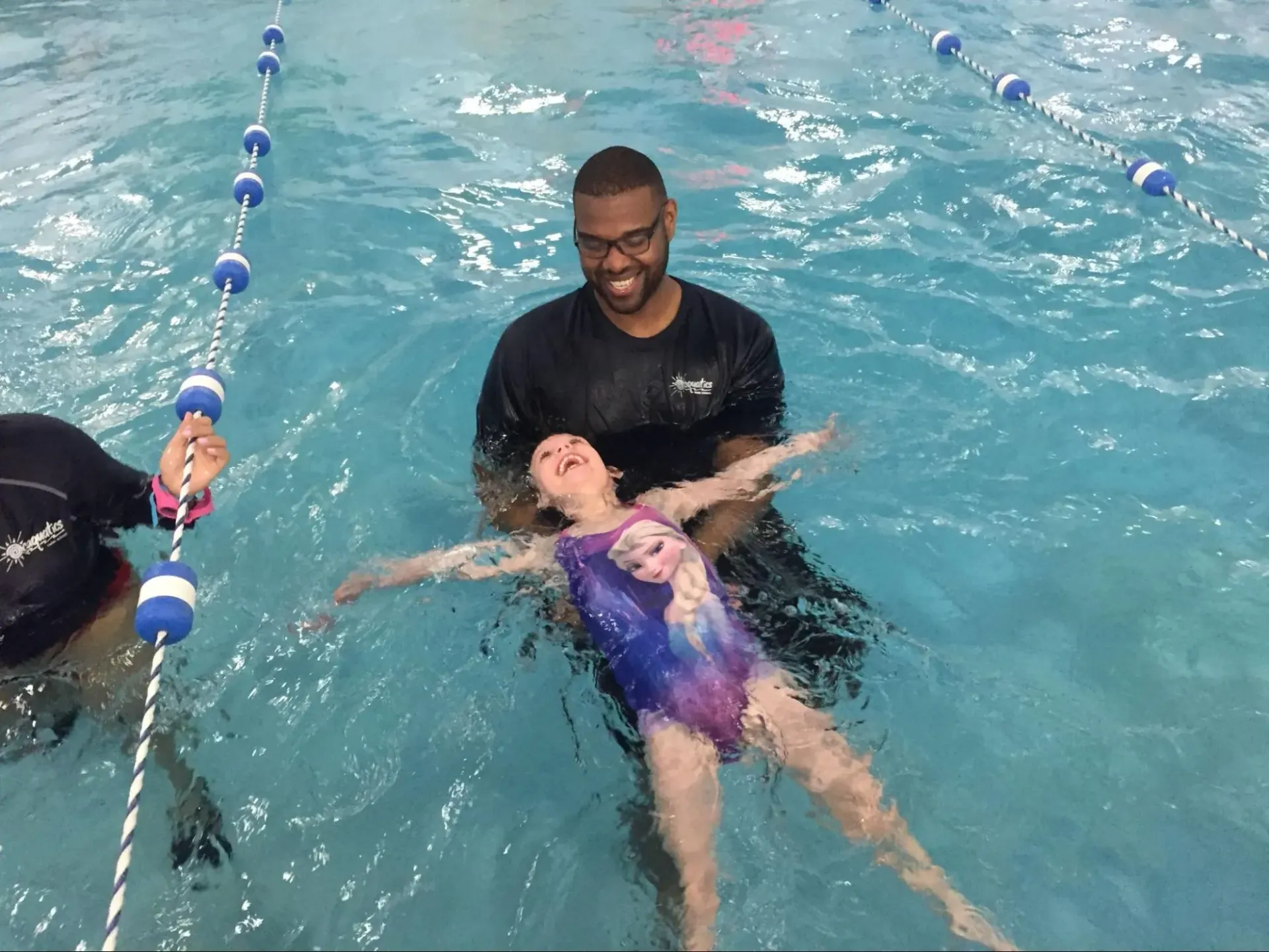
Swimming offers something different: visible, measurable progress. When your child learns to float independently for the first time, or makes it to the other side of the pool without stopping, that's a real win they can feel and see. Those wins accumulate. And a child who believes they can get better at something is a child who's more likely to keep trying, both in the pool and outside of it.
Small class sizes make a real difference here. In a setting where the instructor can give your child individualized attention, corrections feel less like criticism and more like coaching. That environment helps kids build trust, and trust is the foundation of learning.
What to Look for in a Swim Program for Kids with ADHD
Not every swim school is the right fit for a neurodiverse learner. Here's what to keep in mind when you're evaluating options:
- Small class ratios: Fewer kids per instructor means more individual attention and fewer distractions for your child.
- Clear, consistent structure: Look for programs where each lesson follows a predictable format. Predictability reduces anxiety and helps kids settle in faster.
- Patient, experienced instructors: Your child's instructor should be comfortable adjusting their communication style, breaking down instructions into shorter steps, and maintaining a positive energy level.
- Indoor, climate-controlled pools: In South Florida, year-round swimming is possible, but outdoor pools can be loud and unpredictable. An indoor, heated pool creates a more controlled sensory environment.
Ocaquatics Swim School checks these boxes. With five heated indoor pool locations across South Florida and small class ratios built into every program, Ocaquatics has spent over 30 years helping children of all learning styles get comfortable in the water. Parents can also track their child's progress in real time through the Ocaquatics mobile app, adding an extra layer of consistency and communication between lessons.
Your ADHD and Swimming Questions, Answered
Is swimming good for kids with ADHD?
Yes. Swimming combines full-body physical activity with sensory input and structured learning, all things that tend to benefit children with ADHD. It's one of the most frequently recommended activities by pediatric occupational therapists and developmental specialists.
Can swimming improve focus in children with ADHD?
It can. The rhythmic, bilateral nature of swimming engages both hemispheres of the brain, which supports attention and executive function. Many parents notice their child is calmer and more focused in the hours following a swim lesson.
How often should a child with ADHD swim to see results?
Consistency matters more than frequency. Even one lesson per week, maintained over several months, can produce noticeable changes in energy regulation, focus, and confidence. More sessions per week tend to produce faster results.
Are swim classes overwhelming for kids with sensory sensitivities?
It depends on the environment. Loud, crowded outdoor pools can be overstimulating. Indoor pools with smaller class sizes tend to be much more manageable. If your child has sensory sensitivities, look for a program in a controlled, quieter setting.
What if my child is afraid of the water?
Fear of the water is common, and a good swim school knows how to handle it. Patient instructors who introduce children to the water gradually and celebrate small wins can transform fear into confidence over time. Starting as early as 6 months old can also help children build comfort with water before fear has a chance to set in.
Does swimming help with emotional regulation in kids with ADHD?
Yes. Physical activity releases dopamine and serotonin, which support mood stability. The sensory input from water also helps regulate the nervous system. Many parents report fewer meltdowns and better emotional control in children who swim regularly.
Ready to See What the Pool Can Do for Your Child?
If you're in Miami, Coral Gables, or Kendall and you've been looking for an activity that fits how your child's brain works, swimming is worth exploring. The structure, the sensory input, the individual progress, and the pure joy of movement in the water can add up to real changes in your child's daily life.
Ocaquatics Swim School has been helping South Florida families find their footing in the water since 1994. With no registration fees, no membership fees, and five heated indoor pool locations, getting started is straightforward. Contact us to learn more about our programs and find the location closest to your family.