



Summer Swim Lessons: Getting Ready for Pool Parties and Cruises
If there's a big water event on your family calendar, the ideal time to start swim lessons is 3 to 6 months before it happens. Reliable water skills are built through weekly repetition, not a quick crash course. Even a few weeks of lessons can still help, teaching basics like safer pool entry and getting back to the wall, but skills like back floating and swimming a short distance to safety need consistent practice to become automatic, especially for toddlers and preschoolers.
Sound familiar? The invitations are on the fridge. A pool party at a friend's condo, a cruise out of PortMiami in July, a camp with daily swim time. And somewhere around spring break, it hits you that your child isn't as water-ready as you'd like.
Take a breath. Plenty of families in Miami, Coral Gables, and Kendall are doing this exact math right now. Below you'll find a lesson timeline to work backward from, a skill-by-skill picture of what "ready" looks like, and supervision habits that make crowded parties and unfamiliar cruise pools safer. By the end, you'll have a plan instead of a worry.
How Far in Advance Should Kids Start Swim Lessons?
Work backward from the event. For a pool party or cruise, 3 to 6 months of weekly lessons give most kids enough time to build real, repeatable skills. Swimming is muscle memory, and muscle memory comes from showing up week after week.
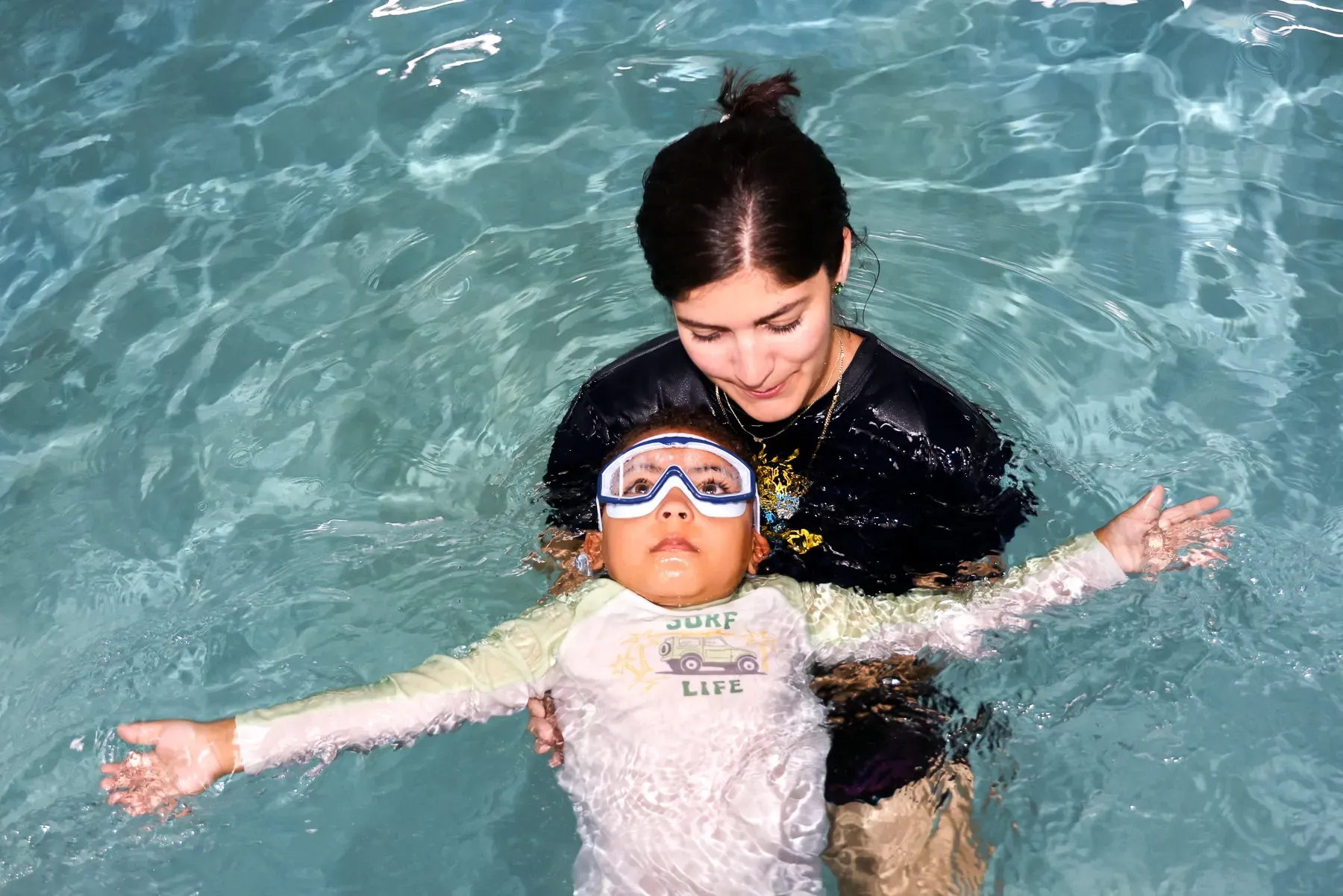
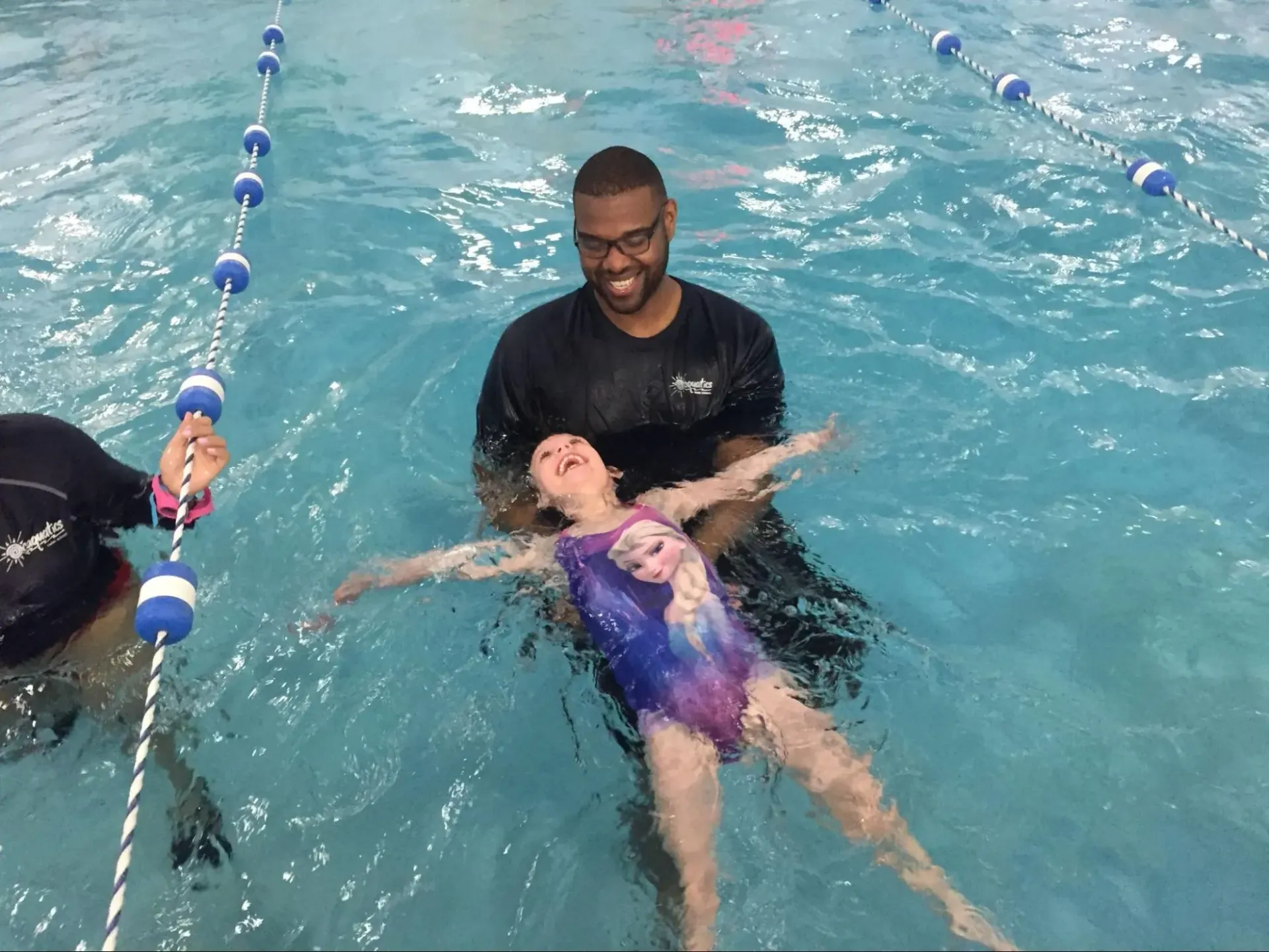
6 months out: The sweet spot. A toddler starting in December or January has time to get comfortable, learn to roll onto their back to breathe, and practice returning to the wall until it's second nature by June.
3 months out: Still a solid runway. Most kids make visible progress on floating, breath control, and moving toward the wall, though nervous swimmers may need every one of those weeks just to relax.
A few weeks out: Don't skip it just because the party's close. A handful of lessons can teach your child to wait for permission before entering the water, climb out at the wall, and feel calmer with their face wet. That's real progress, even if it's not independence.
One honest note: kids in consistent lessons through the year arrive at summer already prepared, something we cover in our post on year-round swim lessons. For now, the takeaway is simple. Whatever your timeline, start now.
What Does "Ready for a Pool Party" Actually Look Like?
A child is in good shape for a backyard or condo pool party when you can check off four things:
- They enter and exit the pool on their own terms: Sitting in entries, steps, or a ladder, without being carried in or lifted out.
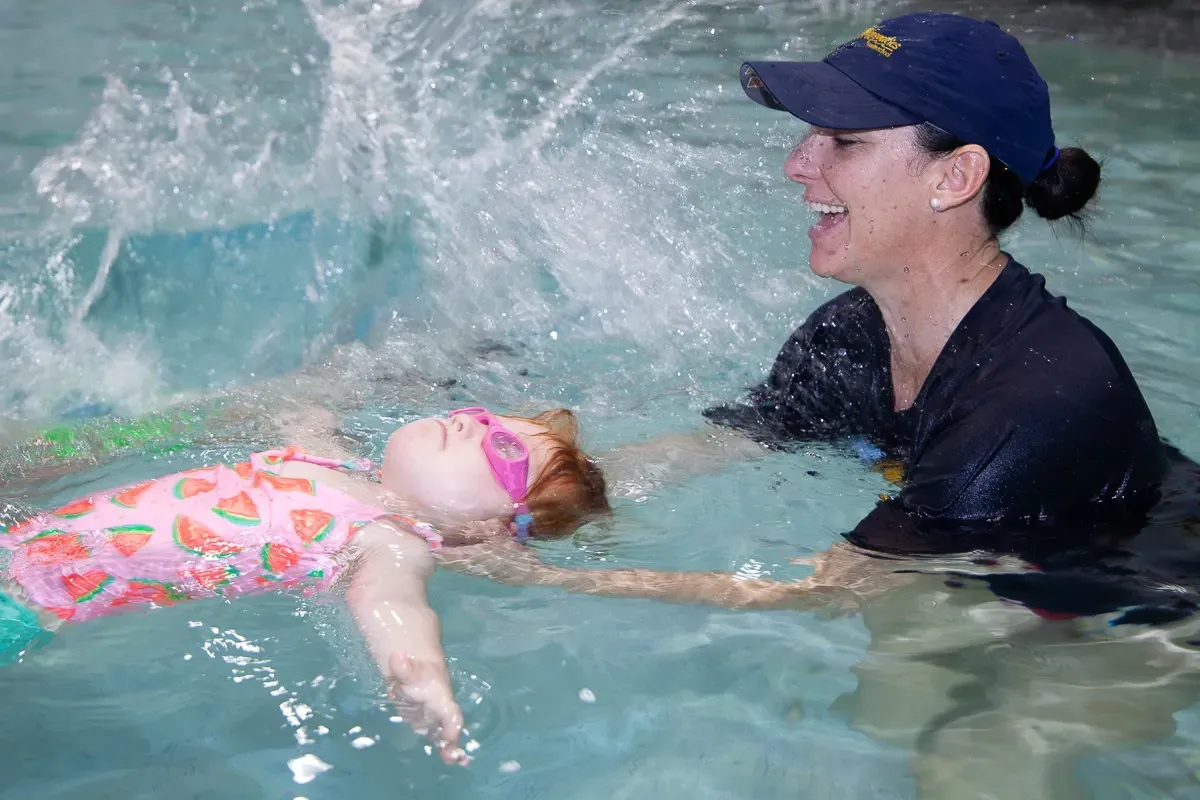
- They can float or roll onto their back: If they get tired or swallow water, they can get their face up and breathe.
- They can return to the wall: After a jump or a stumble, they turn around and get back to the edge without help.
- They wait for permission: Every time, even when other kids are already splashing.
That last one matters more than parents expect. Birthday parties are chaos in the best way: cake, music, twenty kids, adults mid-conversation. A child who understands "we ask first" removes the scariest variable, a kid slipping into the water while everyone's looking at the piñata.
It's also why programs like Ocaquatics, a swim school with five locations across South Florida, build their early levels around these exact skills. The first big goal: a child who jumps in or falls in can get back to the wall on their own. Strokes come later.
Why Cruise Pools Deserve Their Own Game Plan
A cruise pool is not your neighborhood pool. It's unfamiliar, often deeper than kids expect, and busy from breakfast until the sail-away party winds down. The water also moves with the ship, which surprises little swimmers who've only known still water. And while policies vary by cruise line, many ship pools don't have dedicated lifeguards, so supervision falls squarely on you.
Before you board, it helps if your child can roll onto their back to breathe, swim a short distance to the nearest edge or ladder, and follow one firm family rule: nobody swims without a grown-up watching.
Once aboard, walk your child around the pool deck on day one before anyone swims. Show them the depth markers, point out the ladders, and pick a meeting spot. Kids handle new pools better when the pool isn't new anymore.
Floaties vs. Real Skills: What to Trade Before Summer
Puddle jumpers and arm floaties feel like a solution, but they hold kids in a vertical, feet-down position, the opposite of a swimming position, and they create confidence without any skill underneath it. A child who's spent every pool day in a floatie may honestly believe they can swim. The floatie believes otherwise.
The trade you want to make before summer is flotation for skills: back floating instead of bobbing vertically, breath control instead of held-breath panic, and a practiced path back to the wall instead of a device doing the work. If your child needs support in open water or on a boat, a properly fitted U.S. Coast Guard-approved life jacket is the safer choice, not inflatable armbands.
Lessons are where that trade happens. Most kids are prouder of one unassisted float than a whole summer of floating hardware.
Supervision Habits That Make Any Water Event Safer
Skills are half the picture. The other half is what the adults are doing:
- Designate a water watcher: One adult whose only job is watching the pool for a set shift, say 15 or 20 minutes, then hands off to the next adult. No phone, no plate, no side conversations. Backyard parties usually have no lifeguard and lots of distracted grown-ups, and a water watcher fixes that.
- Stay within arm's reach of little ones: For babies, toddlers, and any child who can't yet return to the wall, an adult should be in the water or right at the edge.
- Count heads often: Especially at crowded parties where kids drift between the pool, the bounce house, and the snack table.
- Set the rules before the swimsuits go on: Ask first. Walk on the deck. Kids follow rules better when they hear them calmly and clearly, not shouted over splashing.
Frequently Asked Questions
How long does it take for a child to learn to swim?
Most kids in consistent weekly lessons develop basic water skills, like floating and returning to the wall, within a few months. Independent swimming takes longer and varies by age and comfort. For a breakdown by age, see our parent guide to swim timelines.
Is my child ready for a pool party?
They're in good shape if they can enter and exit on their own, float or roll onto their back, return to the wall after a jump, and always ask before getting in. If any of those are shaky, keep an adult within arm's reach and keep practicing.
Can a few weeks of swim lessons before vacation really help?
Yes. A short runway won't produce an independent swimmer, but it can improve comfort, teach safer entries and exits, and start building the habit of asking permission before getting in.
Do floaties count as water readiness?
No. Flotation devices provide temporary buoyancy, not skills, and they can create false confidence in kids and parents alike. Use a properly fitted life jacket when real flotation is needed.
Your Summer, With Less Hovering and More Cannonballs
The whole point of a pool party or a cruise is to enjoy it. When your child has practiced skills and you have a supervision plan, you get to sit down, eat the cake, and watch the cannonball contest instead of pacing the pool edge.
If you're in Miami, Coral Gables, or Kendall, and summer is circling on the calendar, this is a great week to start.
Ocaquatics teaches kids from 6 months old in five heated indoor pools kept at 90 degrees year-round, with small classes, certified instructors, and a parent app for tracking progress. Swim scholarships are available for eligible families. Reach out, grab a class time that fits your schedule, and give your swimmer a head start on the best parts of summer.